Women are the center pillars of the family and the neighborhood. Many of these determined women who are head of household, with disabled spouse, abandon with children or physically challenged individual need support in terms of training, access to raw materials, and/or financial assistance to empower them. Based on their interest, facilities, and need, they will be provided with funds and the guidance necessary to initiate sustainable livelihood projects such as Cottage Industry and Home Garden.
Our funding for initiating the projects outlined will be based initially on micro-partnerships model as pioneered by Easan Katir. The projects will be funded as an equal partner till it becomes successful.
Cottage Industry
Financial assistance to purchase raw materials will be provided to individuals who undergo training from organizations such as the Association for Rehabilitation of the Disabled (AROD) and the Rural Development Board. These may include but not limited to:
One-on-one customer based activities:
Sewing, embroidery, garland making, envelope making, rattonning chairs, cake decorations, making of handicrafts is a profitable sideline, or a full-time occupation. AROD provides about 2-3 weeks of training depending on their disability and ability to comprehend to identify skill (s) which they can perform well. They also provide 6 months intensive training in one or two skills. The cost including food, lodging and material will be between $100.00 and $400.00 per activity. We will partner with AROD to fund few of these projects and to provide assistance to establish their business
Business based activities:
Sale of fried savory snacks such as plantain & cassava chips, murukku, pagoda, sippi, laddu or similar snacks is a profitable sideline occupation. The Cutting machine or mold, Cooking Vessels, Raw material such as banana and cassava oil, flour, salt, chili powder etc., poly sealer for packaging and label, technical training, and financial management training for business development will be provided.
Local Entrepreneur’s Success Story
Entrepreneur is one who recognizes a business opportunity and undertakes to organize, manage, and assume the risk to convert it to venture. Ms. Padmanathan Ranjanidevi is such a person who has a unique and profitable business of selling fresh fried cassava chips at a reasonable price.
Ms. Padmanathan with our Chairman
Most of us like to munch on fried, crispy & spicy cassava chips for snacks or even enjoy with meals. Her shop is located on KKS Road, near to Kulappiddy Junction, Kokuvil, an easily accessible and customer friendly location near a commercial district. Her shop is open from early afternoon to late evenings are ideal time for munching on snacks especially individuals returning from hard day’s work or enjoying a cool beer or liquor before dinner.
Her success is probably due demand, location and time of operation. This type of entrepreneurship could be repeated with similar savory snacks such as plantain &cassava chips, murukku, pagoda, sippi, laddu or similar snacks. The cutting machine or mold, cooking vessels, raw material such as banana and cassava oil, flour, salt, chili powder etc., poly sealer for packaging and label, technical training, and financial management training for business development will be provided. This venture will be a profitable full-time occupation and may cost around $600.00.
Sale of dairy products such as ghee, paneer and curd or making of decorated cement blocks etc is a profitable sideline occupation. Technical training and financial management training for business development will be provided and may cost around $400.00
Hygienic Needs of Women – During the Monthly Cycle
Funds and guidance will be provided to a group of women to purchase low-cost machines, supplies, and training to produce inexpensive feminine sanitary napkins in their communities and to establish job opportunities for other qualifying individuals to help with processing and distribution. These low cost, hygienic, sanitary pads will give dignity to women in low income groups which will result in improved health outcomes over current unhygienic practices.
This will be a profitable full-time occupation for few women. We identified a low-cost machine from Jayaashree Industries, Coimbatore, India (Arunachalam Muruganantham) which will employ 5 or more women and produce disposable feminine sanitary napkins to satisfy 4,000 women monthly. Technical training and financial management training for business development will be provided.We have partnered with Association for Rehabilitation of the Disabled (AROD), Thirunelvely, Jaffna to establish the first manufacturing unit which became operational on January 2, 2017.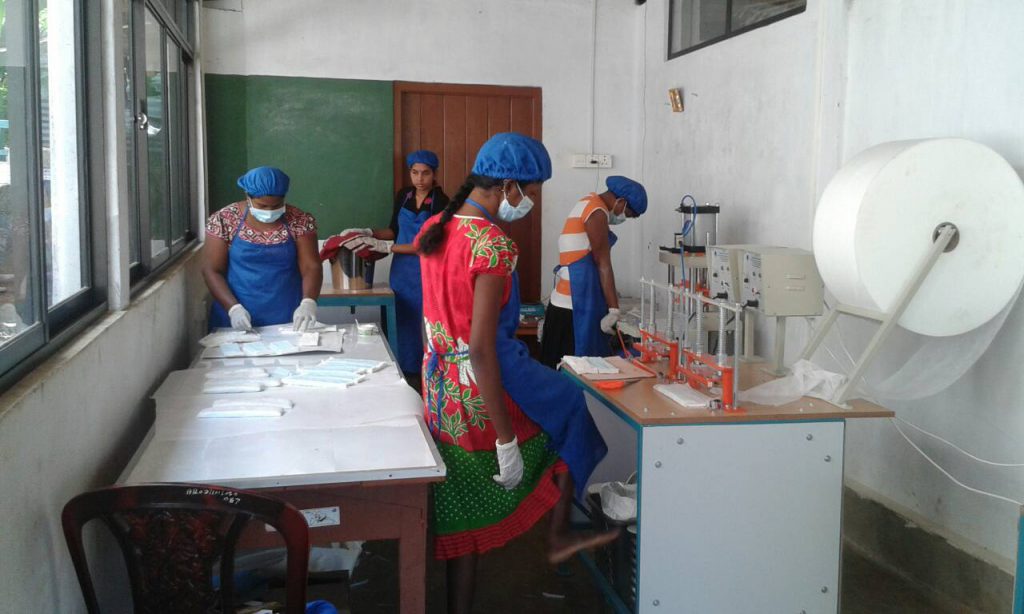
SLDFund Napkin Project.
Home Garden Projects
Seedlings to cultivate cash value plants such as dwarf mangoes, oranges, lemons, limes, passion fruit, pomegranates, and such similar trees that may provide a sustainable income to home gardeners. Seedlings or seeds to grow home garden plants such as tomatoes, brinjals, okra, beans, peppers, and such similar plants that provide healthy food to home gardeners.
Many cash plants and home garden plants are available from private nurseries and government farms and generally cost up to $1.00 per plant.For planting details: Home Garden Plants for North & East by Dr. Paul Benjamin.Bee Keeping
Apiculture is a profitable and healthy venture. Beekeeping to produce local honey is a profitable sideline, or a full-time occupation. Bee hive and bee colony, tools and accessories technical training, and financial management training for business development will be provided. We are in the planning stages of introducing the honey production as a small business industry.Poultry
Funds and guidance will be provided to purchase and maintain twenty egg laying hens along with cage and a month of feed. They will be productive from day one to generate income to beneficiary. Income from sale of eggs may be sufficient to bring them above poverty level. Setting up a poultry unit cost is $300 to $500.
Mr. Thennavan with our Chairman
These upgraded chickens are generally disease resilience; heat tolerance and the ability to utilize poor quality scavenge feeds, attributes essential for achieving sustainable production in low input-output production systems. Technical training and financial management training for business development will be provided. Setting up a poultry unit cost around $500.00.
We have funded a poultry unit with 200 chickens in Kilinochchi which will also be our breeding stock to provide the necessary chickens to our beneficiaries. We have also purchased two battery powered incubators.
Goat Stud Service
Funds and guidance to purchase two Jamnapari goats known for their meat and milk to establish a goat stud service center in rural areas will be provided to selected beneficiary. Initially, the project will provide some support in terms of supplying feeds or maintenance cost for few months in addition to housing. Technical training and financial management training for business development will be also provided. Setting up a goat stud service center generally cost around $500.00
Nanny Goat
Funds and guidance to purchase four or five nanny (female) goats to establish a milking herd to selected beneficiary. Generally, the nannies should be milking in about six months and any young goats (kids) could be sold thereafter and they could replace the milking nannies by purchasing new ones themselves. Initially, the project will provide some support in terms of supplying feeds or running cost for few months in addition to housing. Technical training and financial management training for business development will be provided. Setting up a nanny unit generally cost around $300.00
Education
Many students, especially those from privileged schools, generally have not engaged in meaningful community service work that enhances their educational experience. These service experiences are fundamental to their future outlook on life. Many students also lack the basic understanding of conservation principles.
Funds will be provided to schools to organize groups of 16 to 18 year old students for weekend outings into disadvantaged communities to volunteer their services. They can have hands on experience and appreciate the value of volunteerism. Students learn more about disadvantaged community by becoming actively involved and which may also lead to self discipline. The activities could include but not limited to helping with agriculture, animal husbandry, renovating huts, cottages, and homes, etc.

Rev. Gnanaponrajah with our Chairman
We have initiated the volunteer service program in collaboration with St John’s College principal Rev Jameson Gnanaponrajah, to organize groups of students for weekend outings into disadvantaged communities to experience and appreciate the value of volunteerism.
We have initiated the conservation club as a joint venture with St John’s College principal Rev Jameson Gnanaponrajah.
Funds will be provided to schools to organize conservation clubs for 8 to 12 year old students. They can learn the basic concepts of conservation. This may include the purchase of books and other teaching tools and day trips to nature facilities, etc.
Funds will be provided to grow fruit trees such as oranges, papaw, banana, and other fruit-bearing trees in schools or community centers. This may educate the children on the basic concept of horticulture and provide nutritious fruits for them.
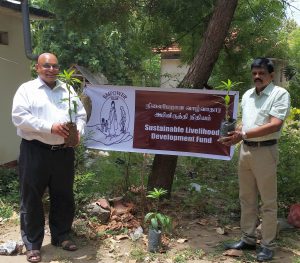
Mr. Murugavel with our Chairman
We have provided 215 Villard – grafted mango plants to be planted in 104 schools in Kilinochchi Zone area to Mr. K Murugavel, Zonal Director of Education.
Diversified Activity
We realize that there are many additional areas in which the SLD Fund activities can grow and we encourage you to contact us with any questions, thoughts, ideas, and/or comments.
Funds will be provided to:
- Organize educational lecture series on home gardening and financial management to disadvantaged communities
- Individuals in a family as micro-grants for travel and incidental expenses for any of the above projects
- Communities for fresh water and irrigation projects such as digging wells, drainage, electric pumps, etc
- As interest free loans to sustain existing projects that need capital to expand or unexpected financial shortcoming
Women are the center pillars of the family and the neighborhood. Many of these determined women who are head of household, with disabled spouse, abandon with children or physically challenged individual need support in terms of training, access to raw materials, and/or financial assistance to empower them. Based on their interest, facilities, and need, they will be provided with funds and the guidance necessary to initiate sustainable livelihood projects such as Cottage Industry and Home Garden.
Our funding for initiating the projects outlined will be based initially on micro-partnerships model as pioneered by Easan Katir. The projects will be funded as an equal partner till it becomes successful.
Cottage Industry
Financial assistance to purchase raw materials will be provided to individuals who undergo training from organizations such as the Association for Rehabilitation of the Disabled (AROD) and the Rural Development Board. These may include but not limited to:
One-on-one customer based activities:
Sewing, embroidery, garland making, envelope making, rattonning chairs, cake decorations, making of handicrafts is a profitable sideline, or a full-time occupation. AROD provides about 2-3 weeks of training depending on their disability and ability to comprehend to identify skill (s) which they can perform well. They also provide 6 months intensive training in one or two skills. The cost including food, lodging and material will be between $100.00 and $400.00 per activity. We will partner with AROD to fund few of these projects and to provide assistance to establish their business
Business based activities:
Sale of fried savory snacks such as plantain & cassava chips, murukku, pagoda, sippi, laddu or similar snacks is a profitable sideline occupation. The Cutting machine or mold, Cooking Vessels, Raw material such as banana and cassava oil, flour, salt, chili powder etc., poly sealer for packaging and label, technical training, and financial management training for business development will be provided.
Local Entrepreneur’s Success Story
Entrepreneur is one who recognizes a business opportunity and undertakes to organize, manage, and assume the risk to convert it to venture. Ms. Padmanathan Ranjanidevi is such a person who has a unique and profitable business of selling fresh fried cassava chips at a reasonable price.
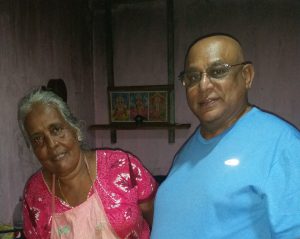
Padmanathan Ranjanidevi with our Chairman
Her success is probably due demand, location and time of operation. This type of entrepreneurship could be repeated with similar savory snacks such as plantain &cassava chips, murukku, pagoda, sippi, laddu or similar snacks. The cutting machine or mold, cooking vessels, raw material such as banana and cassava oil, flour, salt, chili powder etc., poly sealer for packaging and label, technical training, and financial management training for business development will be provided. This venture will be a profitable full-time occupation and may cost around $600.00.Most of us like to munch on fried, crispy & spicy cassava chips for snacks or even enjoy with meals. Her shop is located on KKS Road, near to Kulappiddy Junction, Kokuvil, an easily accessible and customer friendly location near a commercial district. Her shop is open from early afternoon to late evenings are ideal time for munching on snacks especially individuals returning from hard day’s work or enjoying a cool beer or liquor before dinner.
Sale of dairy products such as ghee, paneer and curd or making of decorated cement blocks etc is a profitable sideline occupation. Technical training and financial management training for business development will be provided and may cost around $400.00
Hygienic Needs of Women – During the Monthly Cycle
Funds and guidance will be provided to a group of women to purchase low-cost machines, supplies, and training to produce inexpensive feminine sanitary napkins in their communities and to establish job opportunities for other qualifying individuals to help with processing and distribution. These low cost, hygienic, sanitary pads will give dignity to women in low income groups which will result in improved health outcomes over current unhygienic practices.
This will be a profitable full-time occupation for few women. We identified a low-cost machine from Jayaashree Industries, Coimbatore, India (Arunachalam Muruganantham) which will employ 5 or more women and produce disposable feminine sanitary napkins to satisfy 4,000 women monthly. Technical training and financial management training for business development will be provided.We have partnered with Association for Rehabilitation of the Disabled (AROD), Thirunelvely, Jaffna to establish the first manufacturing unit which became operational on January 2, 2017.
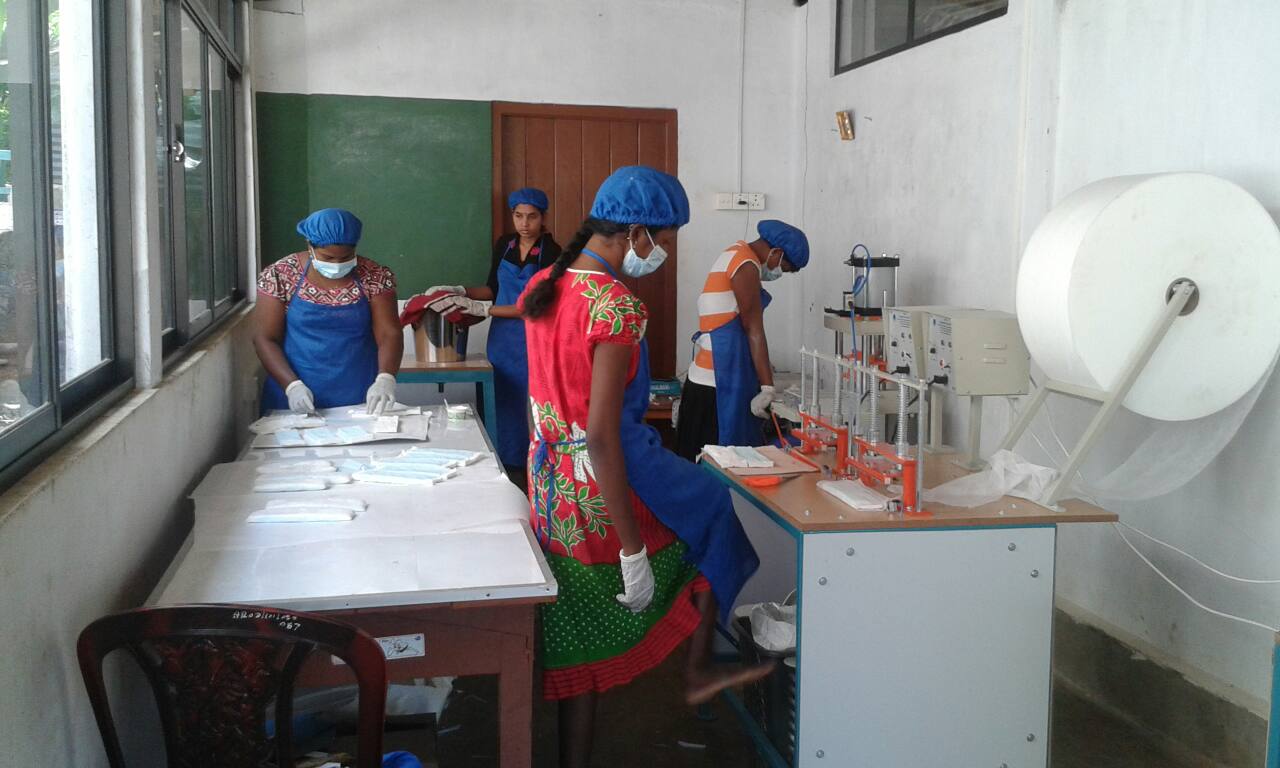
SLDFund Napkin Project at AROD Jaffna
Home Garden Projects
Seedlings to cultivate cash value plants such as dwarf mangoes, oranges, lemons, limes, passion fruit, pomegranates, and such similar trees that may provide a sustainable income to home gardeners. Seedlings or seeds to grow home garden plants such as tomatoes, brinjals, okra, beans, peppers, and such similar plants that provide healthy food to home gardeners.
Many cash plants and home garden plants are available from private nurseries and government farms and generally cost up to $1.00 per plant.For planting details: Home Garden Plants for North & East by Dr. Paul Benjamin.
Bee Keeping
Apiculture is a profitable and healthy venture. Beekeeping to produce local honey is a profitable sideline, or a full-time occupation. Bee hive and bee colony, tools and accessories technical training, and financial management training for business development will be provided. We are in the planning stages of introducing the honey production as a small business industry.
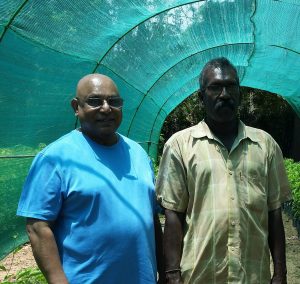
Mr. Thennavan with our Chairman
Poultry
Funds and guidance will be provided to purchase and maintain twenty egg laying hens along with cage and a month of feed. They will be productive from day one to generate income to beneficiary. Income from sale of eggs may be sufficient to bring them above poverty level. Setting up a poultry unit cost is $300 to $500.
These upgraded chickens are generally disease resilience; heat tolerance and the ability to utilize poor quality scavenge feeds, attributes essential for achieving sustainable production in low input-output production systems. Technical training and financial management training for business development will be provided. Setting up a poultry unit cost around $500.00.
We have funded a poultry unit with 200 chickens in Kilinochchi which will also be our breeding stock to provide the necessary chickens to our beneficiaries. We have also purchased two battery powered incubators.